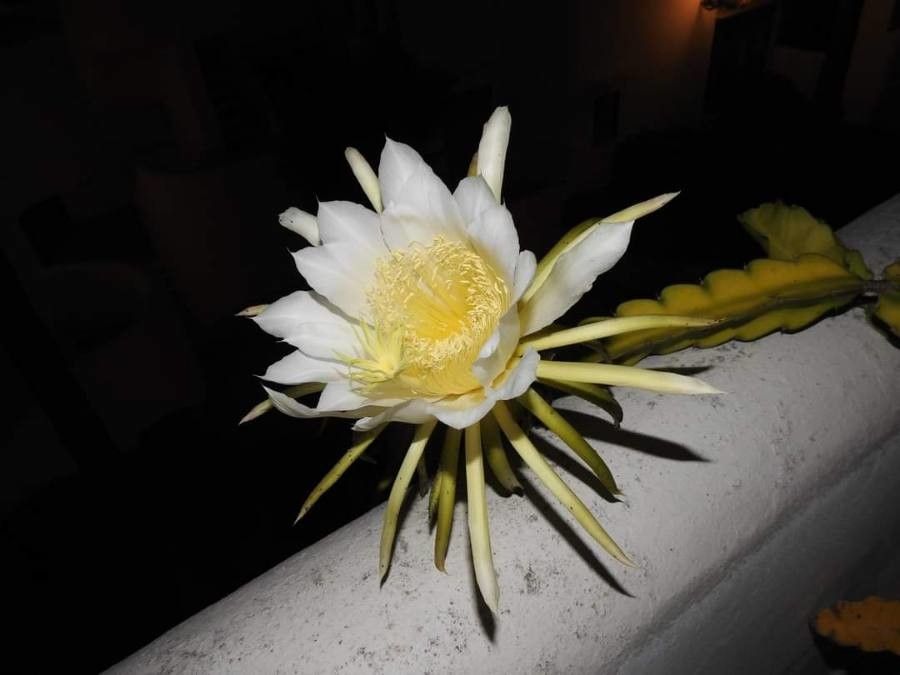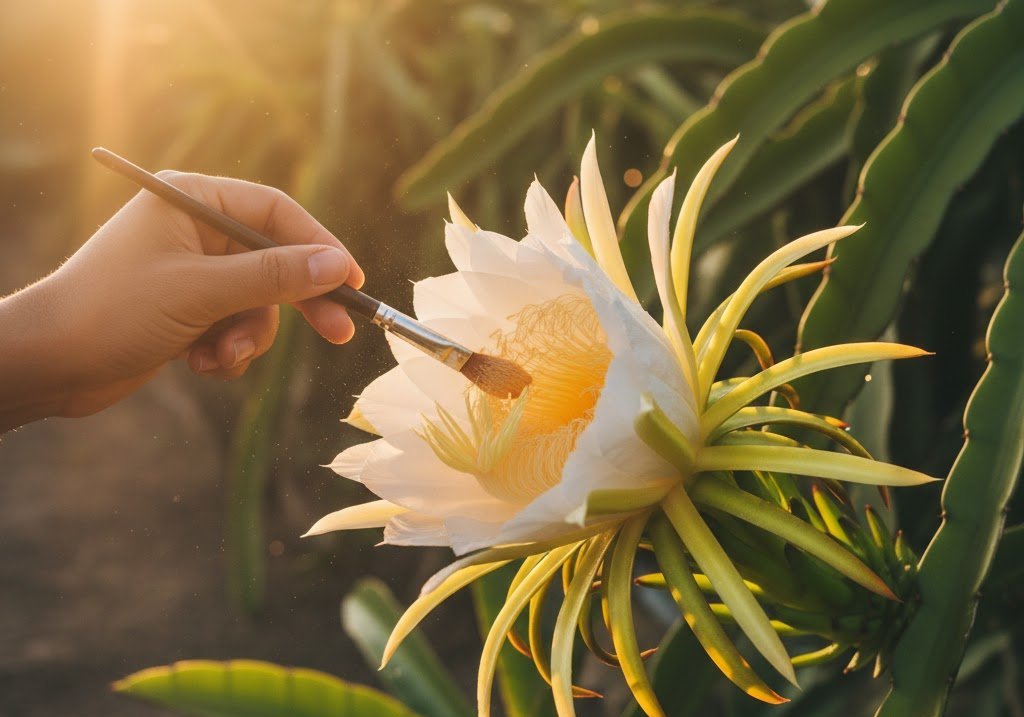
Have you ever watched your stunning, night-blooming dragon fruit flower fade without producing a single fruit? It's a common heartbreak for gardeners. You get this incredible, fragrant blossom one evening, only for it to wilt by morning with nothing to show for it. This isn't just bad luck; it’s a pollination puzzle.
The secret often lies in understanding your plant's specific needs and its brief, nocturnal blooming cycle. Knowing how to pollinate dragon fruit by hand is the single most important skill to turn those fleeting flowers into a delicious harvest.
This guide is your field manual for success. You'll learn:
How to identify if your dragon fruit variety is self-fertile or needs a partner.
The critical timing for pollinating these night-blooming flowers.
A simple, step-by-step technique for effective hand-pollination.
By the end, you'll feel confident stepping in for nature to ensure every beautiful bloom has the chance to become a tasty fruit.
Understanding Your Dragon Fruit's Pollination Needs
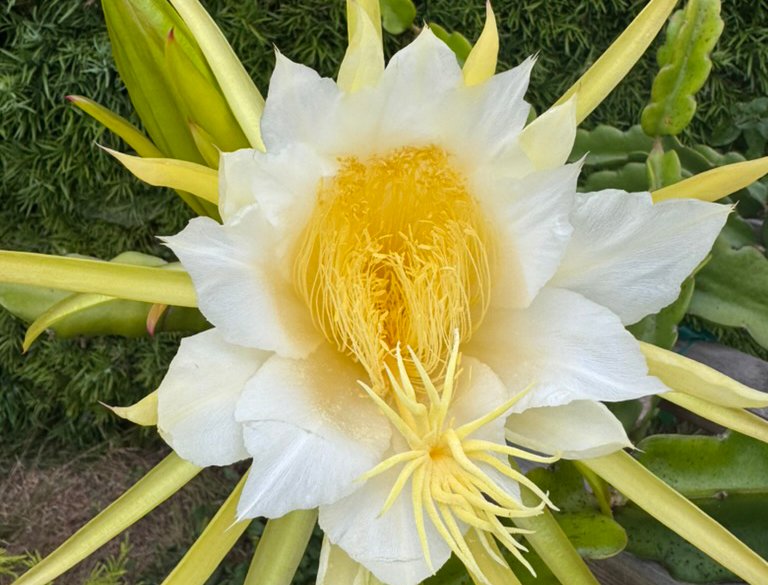
First things first, you need to figure out if your dragon fruit plant (Hylocereus spp.) can go it alone or if it needs a friend. This is a make-or-break step for getting any fruit at all.
Many popular dragon fruit varieties, particularly those that are self-sterile, require pollen from a different dragon fruit variety to produce fruit. A common beginner's mistake is having just one plant that flowers without yielding fruit, due to the need for cross-pollination.
On the other hand, some types are self-fertile, meaning they can pollinate themselves. But here’s a pro-tip: even self-fertile varieties often produce larger, tastier fruit with cross-pollination. It’s a great reason to put some companion planting strategies to work.
Research confirms this. For instance, the 'Hongshuijing' variety is self-incompatible and absolutely needs hand-pollination from another cultivar to set fruit. Meanwhile, a self-compatible variety like 'Dahong' will produce fruit on its own, but the quality improves with cross-pollination. You can read more about these pollination findings here.
This is where Tendra’s Cultivar Explorer becomes invaluable. You can quickly look up your variety to understand its specific needs and whether it requires a pollination partner.
Self-Fertile vs. Self-Sterile Dragon Fruit Cultivars
Getting to know your cultivar's pollination requirements is the first step toward a successful harvest. This table breaks down the key differences so you can figure out what you're working with.
| Attribute | Self-Fertile (Self-Compatible) | Self-Sterile (Self-Incompatible) |
|---|---|---|
| Pollination Requirement | Can set fruit with its own pollen. | Requires pollen from a different, genetically distinct cultivar. |
| Typical Scenario | You can get fruit from a single plant. | You need at least two different varieties that flower at the same time. |
| Benefit of Cross-Pollination | Still highly recommended; often results in larger and better-quality fruit. | Absolutely essential; no cross-pollination means no fruit. |
| Common Examples | American Beauty, Sugar Dragon (often used as a "universal" pollinator). | Physical Graffiti, Dark Star, Cosmic Charlie, Purple Haze, Asunta varieties. |
Understanding the pollination type of your dragon fruit is crucial for a successful harvest. Use the dragon fruit cultivar from the Tendra app to determine its pollination type: Tendra App Dragon Fruit. If your dragon fruit is self-sterile, it's important to plant a compatible variety nearby. If it is self-fertile, you're in a favorable position, but adding another variety can still greatly enhance your harvest.
Catching the Perfect Pollination Window
Dragon fruit flowers are a spectacular, yet fleeting, event. Surprising fact: they open for just a single night. If you miss that window, you've missed your chance for fruit from that bloom. It's a high-stakes gardening game.
You'll know the show is about to start when a flower bud swells and its color lightens. That’s your cue to be ready for that evening. The prime time for pollination is a race against the sunrise, usually kicking off around 9 PM and running until the first light of dawn, just before the flower wilts and closes forever.
I've learned from experience that the peak time for success is from four hours before to twelve hours after the flower is fully open. You really want to be out there in the middle of the night.
A Practical Guide to Hand Pollination
Alright, this is where the magic happens. To guarantee fruit, you’ll need to play the part of a nocturnal pollinator like a moth or bat. It's easier than it sounds!
Grab a small, soft paintbrush—a clean makeup brush works wonders—or even a simple cotton swab. Your first move is to gently collect the fluffy, yellow pollen from the ring of stamens inside an open flower. Be thorough but delicate; the pollen is incredibly fine and you don't want to damage the flower.
Next, carefully transfer that pollen to the stigma—the prominent, star-shaped structure right in the center of the flower. If you have a self-fertile variety, you can use pollen from the same flower. Fo
To cross-pollinate, transfer pollen from the flower of one variety to the stigma of another variety. You can also preserve pollen from earlier blooming by keeping it in the refrigerator for a few days.
Think of it like you're dusting for fingerprints. Your goal is to coat the entire sticky surface of the stigma with pollen. This simple two-step dance is your ticket to a successful harvest.
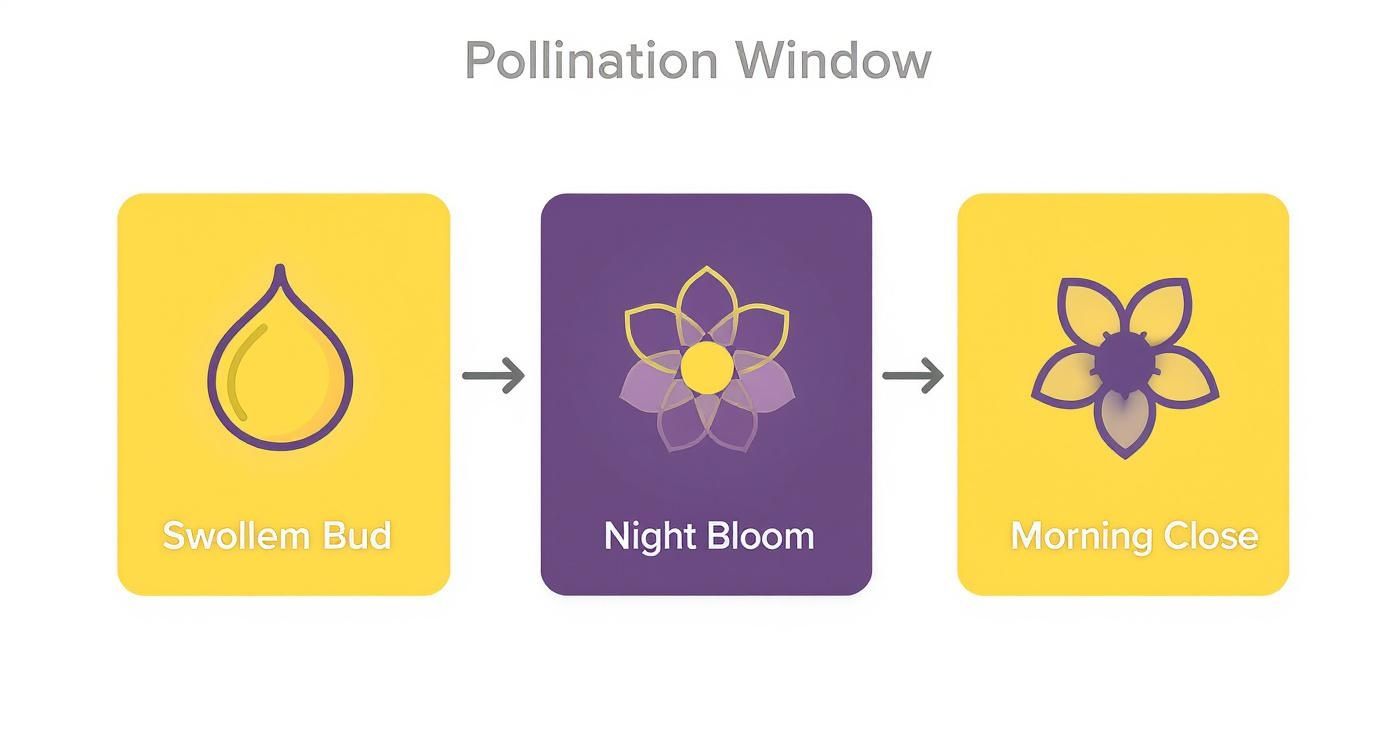
As you can see, timing is everything. That beautiful bloom only gives you one night to work your magic, opening in the evening and closing for good by morning. Don't miss it.
Troubleshooting Common Pollination Issues
It’s incredibly frustrating when beautiful flowers bloom, only to wither and fall off without setting fruit. If you've ever experienced this, you're not alone. Often, the culprit is a self-sterile variety that simply needs pollen from a different plant.
Another common headache is a timing mismatch: you have compatible varieties, but their bloom times don't sync up. One plant is ready while its partner is weeks away from flowering.
A fantastic workaround is to collect and store pollen. When one flower opens, gently tap its pollen into a small, airtight container. Pop it in the refrigerator, and it will stay viable for a few days—perfect for when that other flower finally opens. This little bit of planning can make a huge difference in your harvest.
Taking the time for precise hand-pollination is a game-changer for fruit yield.
A Gardener's Success Story
Let's look at a real-world scenario. Sarah from Phoenix, AZ, was stumped. Her single 'Asunta 5' dragon fruit plant produced gorgeous magenta flowers every summer, but they never turned into fruit. She assumed her climate was the issue. After using Tendra’s AI Plant ID and checking the Cultivar Explorer, she discovered her variety was self-sterile. The problem wasn't her location; it was a lack of a pollination partner.
Instead of buying a second plant with limited space, Sarah used Tendra’s Twin Plant Mates feature. She found a fellow gardener, Mark, just two miles away who grew a 'Sugar Dragon' variety—a known universal pollinator. They arranged a "pollen swap." Sarah collected her flower's pollen, refrigerated it, and exchanged it with Mark. The next time her plant bloomed, she used the 'Sugar Dragon' pollen. Within a week, she saw a tiny green fruit forming. For the first time in three years, she was on her way to a real harvest, all thanks to a community connection.
After Pollination: What to Expect Next
So you've done the delicate work of playing cupid for your dragon fruit flowers. What now? You won’t have to wait long to see if your efforts paid off. You should know one way or the other within just a few days.
The biggest giveaway is the base of the flower, where it meets the cactus stem. If you were successful, this area will start to swell and take on a vibrant green color. The bloom itself will wilt and fall away, but that little green base will stick around and begin its journey into a fruit.
On the flip side, if pollination didn't take, the entire flower—base and all—will typically turn yellow, shrivel up, and drop off the plant completely. Watching that tiny green orb get bigger day by day is one of the most satisfying parts of growing, and you can track its progress with our guide on how to grow dragon fruit at home.
Conclusion: From Flower to Fruit
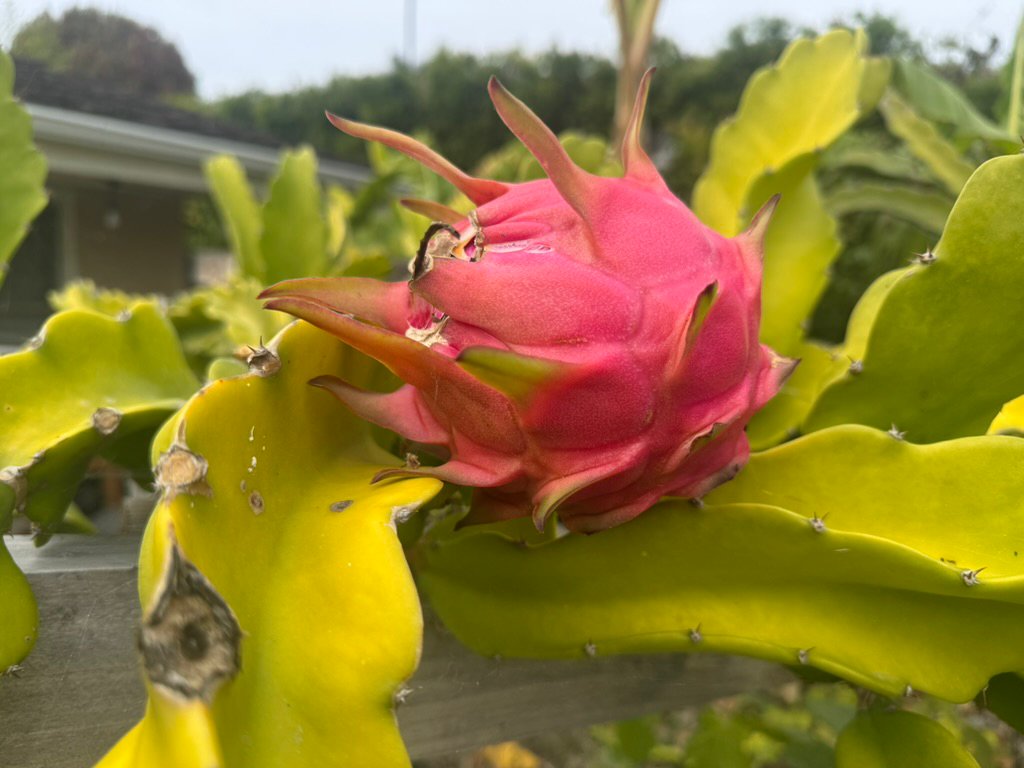
Mastering how to pollinate dragon fruit transforms you from a passive observer into an active participant in your garden's success. It’s a simple skill that unlocks the potential for an incredible harvest. By understanding your variety's needs, nailing the timing, and using a gentle hand, you can ensure those spectacular night-blooming flowers fulfill their destiny.
Remember the key takeaways:
Identify if your plant is self-fertile or self-sterile.
Pollinate during the single night the flower is open.
Use a soft brush to transfer pollen from the stamen to the stigma.
Don't be afraid to connect with other growers for pollen swaps.
This is the kind of gardening challenge where community knowledge makes all the difference. Explore 140+ dragon fruit varieties and find local growing partners with Tendra—where gardeners connect, grow, and share.