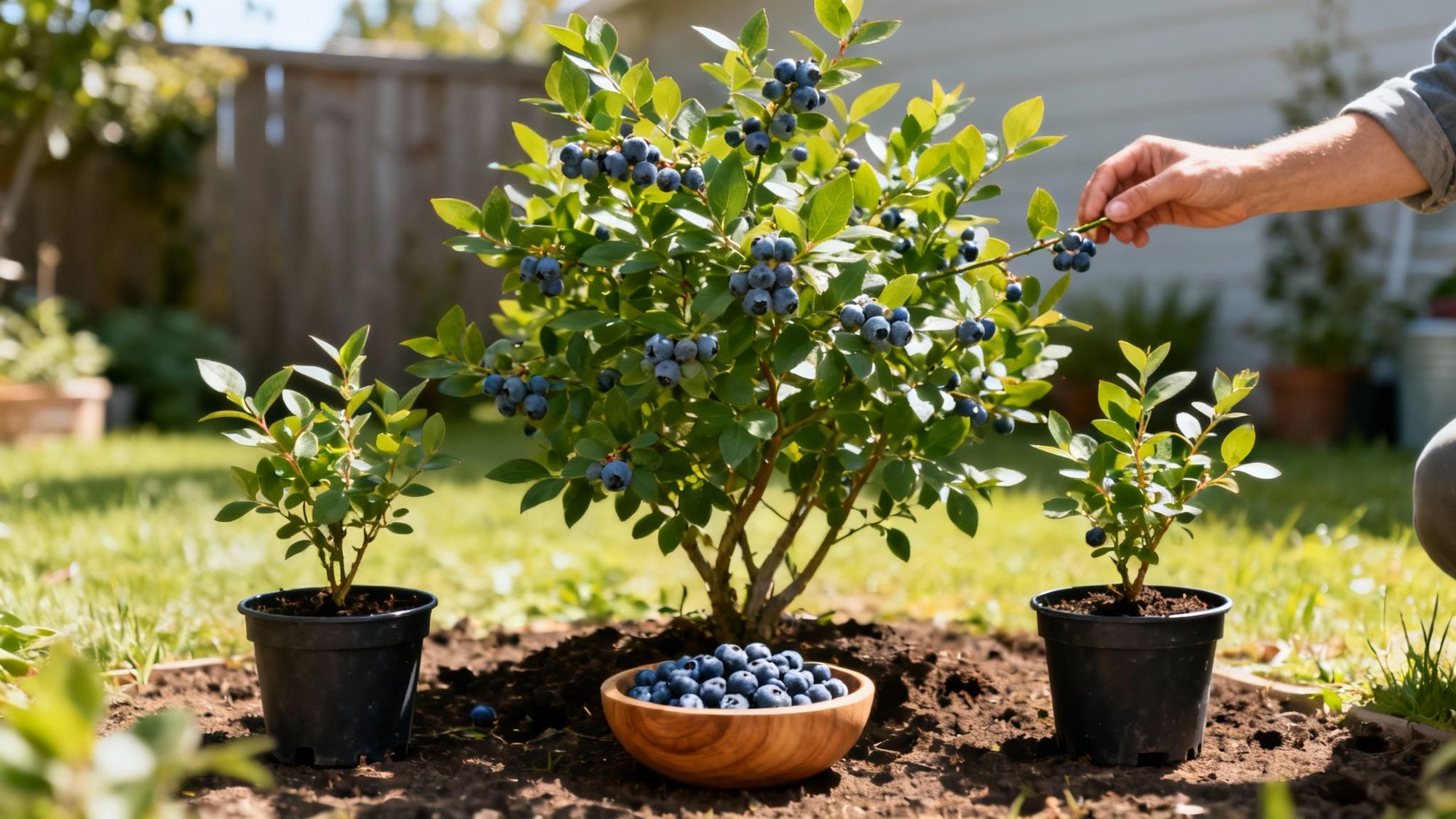
Ever dreamed of walking into your garden and harvesting endless bowls of sweet, sun-warmed blueberries, all without buying another plant? You absolutely can. With a little know-how, you can take cuttings from your favorite blueberry bush and turn it into a thriving patch. It’s one of the most rewarding garden projects you can tackle, and learning how to propagate blueberries is your ticket to a truly sustainable harvest. This guide will show you exactly how to multiply your best plants for an orchard of your own making.
From One Blueberry Bush to an Endless Supply
Learning how to propagate blueberries, from beloved highbush varieties (Vaccinium corymbosum) to other types, is a game-changer for any gardener. It’s the ultimate sustainable skill—letting you multiply your best plants to expand your berry patch or share with friends and neighbors. You’re simply tapping into the plant's natural ability to regenerate. The magic here is that you're creating a genetically identical clone. Got a bush that produces exceptionally sweet fruit or stands up to local pests like a champ? Propagation guarantees those exact same traits in your new plants.
Why Propagation is a Gardener's Secret Weapon
Beyond saving money, propagating your own plants connects you to your garden on a deeper level. You're not just buying and planting; you're actively creating new life. While there are a few ways to make new blueberry plants, taking cuttings is the most popular and reliable method for home gardeners. It skips the long, often unpredictable process of growing from seed. With just a few simple tools and a bit of patience, you can transform a single branch into a dozen healthy new blueberry starts.
Surprising Fact: It can take 8-12 weeks for a blueberry cutting to root, but once established, that new plant can remain productive for up to 50 years. That’s a true garden legacy!
One of the best tricks for success is to start with cuttings from a plant that’s already thriving in your area. This is where Tendra's Twin Plant Mates feature becomes invaluable. By connecting you with local gardeners, you can find cuttings from blueberry varieties proven to flourish in your specific climate and soil. Forget the guesswork and tap into shared community knowledge.
Setting Up Your Propagation Station for Success
Before you even think about taking that first cutting, your journey starts with a proper setup. Think of it as a nursery for your future plants. Getting the environment just right is critical when you're trying to coax stubborn blueberry cuttings to root. A clean, well-organized station does more than just boost your odds of success—it makes the whole process more enjoyable. You're creating a sterile, supportive space where new roots can emerge without fighting off pathogens.
The Essential Toolkit
First, let's get your gear together. Having everything you need within arm's reach is key to avoiding contamination and keeping your workflow smooth.
Sterile Pruning Shears: A clean cut is non-negotiable. Wipe your shear blades with rubbing alcohol or a 10% bleach solution before you start and between different plants. It’s a simple step that prevents spreading disease.
Rooting Hormone: This is your secret weapon. Most blueberry cuttings can use a little push, and a good rooting hormone—whether it's powder, gel, or liquid—provides the auxins they need to kickstart root development.
The Right Containers: You don’t need to get fancy. Small 3-4 inch (7-10 cm) pots, nursery flats, or even clean yogurt cups with drainage holes punched in the bottom work perfectly fine.
A Humidity Dome: This is a real game-changer. Cuttings need high humidity to survive before they have roots, and a dome creates the perfect mini-greenhouse. A clear plastic storage tote flipped upside down or a simple plastic bag placed over the pot will do the trick.
Crafting the Perfect Growing Medium
Blueberries are famous for loving acidic conditions, and their cuttings are no different. They need a growing medium that's sterile, airy, and acidic. The most reliable recipe is a simple 50/50 blend of sphagnum peat moss and coarse perlite. The peat moss provides acidity and holds moisture, while the perlite guarantees excellent drainage and aeration. Whatever you do, avoid using regular garden soil—it's far too heavy and can be full of fungal spores.
Practical Tip: Always moisten your peat moss before mixing it with perlite. Dry peat is hydrophobic (it repels water), making it a nightmare to hydrate evenly once it's in the pot. The final mix should feel like a well-wrung-out sponge.
This focus on propagation isn't just a home gardening trick; it powers the global blueberry industry. Consider this: between 2010 and 2019, global blueberry production more than doubled. That incredible growth was fueled by efficient propagation techniques in key regions like Peru, which you can read about in this incredible blueberry expansion on Italianberry.it.
Mastering The Art of Blueberry Cuttings
With your station ready, it's time for the fun part—taking the cuttings. This is the moment you start creating new blueberry plants. The absolute key here is timing. The season dictates whether you'll take softwood cuttings from fresh growth in the spring or hardwood cuttings from dormant stems in the winter. Both methods are solid, but they follow different timelines and require a slightly different touch.
Propagating With Softwood Cuttings (Spring/Summer)
When your blueberry bushes are bursting with new, vibrant growth in late spring or early summer, you have the perfect material for softwood cuttings. This new growth is pliable and ready to put down roots.
Select a Stem: Look for healthy, vigorous new shoots from the current season, about 4-6 inches (10-15 cm) long. Use the "bend test": if it snaps cleanly, it's perfect.
Make the Cut: Use your sterile shears to make a clean, angled cut right below a leaf node.
Prep the Cutting: Gently strip the leaves from the bottom half, leaving just two or three at the top. Lightly "wound" the base by making a couple of shallow, vertical scratches on the bottom inch to expose the cambium layer.
Apply Hormone: Dip the wounded end into your rooting hormone, tapping off any excess.
Plant It: Use a pencil to poke a hole in your pre-moistened growing mix, gently slide the cutting in, and firm the medium around it. Cover the container with your humidity dome.
Propagating With Hardwood Cuttings (Fall/Winter)
When your bushes are dormant in late fall or winter, it's prime time for hardwood cuttings. These mature, woody stems have stored energy, giving them a fantastic head start.
Select a Cane: Choose healthy, straight canes that grew during the last season.
Cut Sections: Cut sections that are about 4-6 inches (10-15 cm) long, ensuring each piece has at least two or three leaf buds. A great tip is to make a flat cut at the top and an angled cut at the bottom so you don't forget which end goes down.
Prep and Plant: Just like with softwood cuttings, wound the base and dip it in rooting hormone. Plant them deep enough that only the top bud or two is above the surface.
This visual guide breaks down the essential tools and steps for preparing your blueberry cuttings for success.
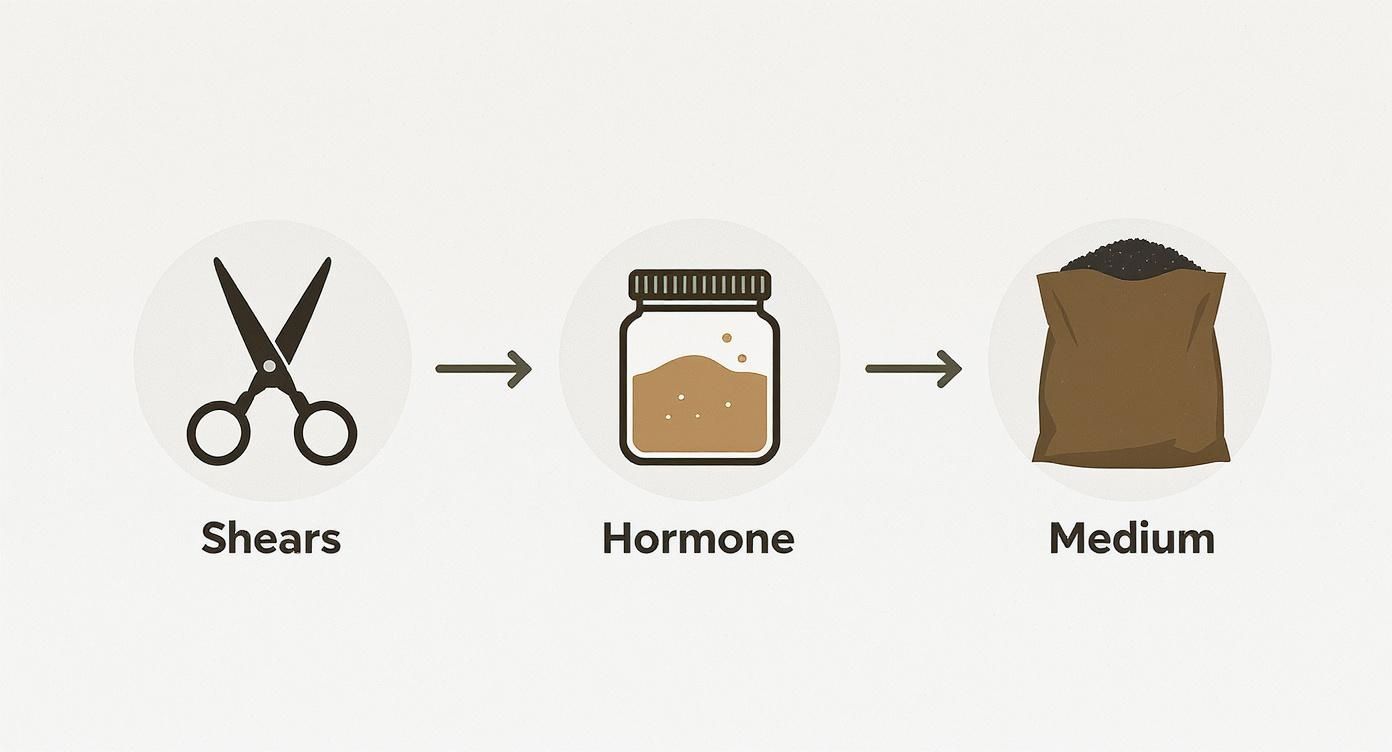
Hardwood cuttings are a lesson in patience. They won't do much until spring warmth signals them to grow. Your job is to keep the medium consistently moist (but not soggy) all winter.
Softwood vs. Hardwood: Which is Better?
| Attribute | Softwood Cuttings | Hardwood Cuttings |
|---|---|---|
| Timing | Late spring to early summer | Late fall to early spring (dormant season) |
| Stem Type | New, flexible green growth | Mature, woody growth from the previous season |
| Rooting Speed | Faster (typically 6-8 weeks) | Slower (can take several months) |
| Success Rate | Good, but sensitive to drying out | Often higher and more reliable |
| Care Needs | Requires high humidity and consistent moisture | More resilient, requires less intensive care initially |
Both methods work great. Research shows that hardwood cuttings of popular highbush varieties can achieve a 75% success rate with the right setup. You can dig deeper into blueberry propagation techniques from the USDA. The best method is simply the one that fits the current season.
Problem: Cuttings are Drying Out
A common hurdle is keeping cuttings from drying out before they root. Since they have no roots, they can't absorb water to replace what's lost through their leaves.
Solution: This is why a humidity dome is your best friend. By placing a clear plastic dome or bag over your cuttings, you trap moisture and create a humid microclimate. This dramatically slows water loss, buying the cutting precious time to develop a healthy root system. It’s a simple step that makes a world of difference.
Nurturing Your Newly Rooted Blueberry Plants
Getting a cutting to root is a huge win, but the job isn't over. The next few months are about carefully nurturing this fragile new plant and turning it into a garden-ready bush. These new plants are sensitive and need consistent care to build a strong foundation.
First Steps After Rooting
Once you feel slight resistance when gently tugging the stem, roots have formed. Keep the soil consistently moist but never waterlogged. Let the top inch (2.5 cm) of soil dry slightly before watering again. Bright, indirect light is perfect; direct sun will scorch their tender new leaves.
Transplanting to a Bigger Home
After about a month, your plant will be ready for an upgrade. Choose a pot that’s about 2 inches (5 cm) wider in diameter. A pot that's too large holds excess moisture and can cause root rot. Blueberries need acidic soil with a pH between 4.5 and 5.5. A blend of equal parts peat moss, compost, and perlite is ideal. If you're new to tweaking soil chemistry, Learn more about mastering soil pH in our gardener's guide.
Hardening Off Your New Plants
Before moving your plants to the garden, they need a slow introduction to the outdoors. This process, called hardening off, is crucial for preventing transplant shock.
Start by placing the pots outside in a sheltered, shady spot for an hour.
Each day, increase their time outdoors by an hour or so.
After 7-10 days, they will be tough enough to handle a full day of sun and can be planted in their permanent spot.
This patient care is what separates success from failure. It’s easy to forget a watering, which is where Tendra’s Smart Care Reminders can be a game-changer, helping you stay on schedule for your most fragile new plants. These simple techniques mirror what drives the global market, as detailed in reports on the global blueberry industry.
Common Questions About Propagating Blueberries
Even with a guide, questions pop up. Here are straightforward answers to the most common ones.
How long does it take for blueberry cuttings to root?
Patience is key. Softwood cuttings taken in spring should root within 6 to 10 weeks. Hardwood cuttings taken during winter are slower, taking anywhere from 3 to 5 months. Resist the urge to pull them out to check; a gentle tug that meets resistance is your sign that roots have formed.
Can I propagate blueberries in water?
While tempting, the answer is no. Unlike many houseplants, blueberries are highly susceptible to rot when left in water. Any roots that do form tend to be weak and struggle to adapt to soil. Always stick to a well-draining, acidic growing medium for strong, healthy root development.
Why are my cuttings turning black or mushy?
This is almost always a sign of too much moisture. Overly wet conditions create a breeding ground for fungal diseases that cause rot. To avoid this, ensure your soil mix is damp but never soggy, and vent your humidity dome daily for fresh air. If you suspect a fungus problem, learning how to identify and stop plant diseases fast can help save your batch.
When will my new plant produce fruit?
Here’s the final dose of patience. A successfully rooted cutting typically takes about two to three years to produce its first small harvest. By year four or five, that little cutting will have grown into a robust, productive bush, ready to reward you with berries for decades to come.
You now have the knowledge to turn one beloved blueberry bush into a flourishing patch. By mastering how to propagate blueberries, you’re not just growing fruit—you’re creating a sustainable, delicious legacy in your own backyard. Connect with local gardeners who have solved this exact problem. Discover Tendra's Twin Plant Mates—where local gardeners connect and thrive. https://tendra-app.com


